Hormuz closure a symptom of global dereliction
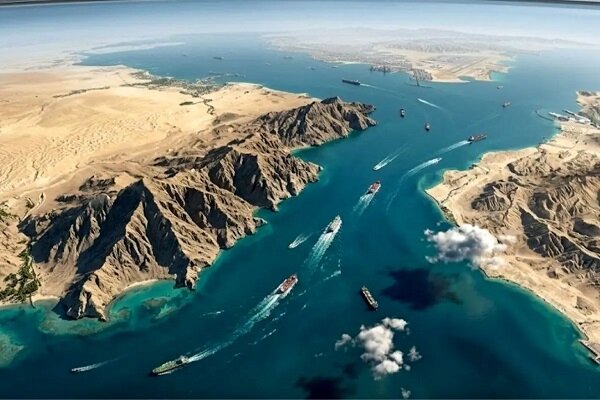
Some recent commentaries regarding the state of the Strait of Hormuz, while articulating a genuine global anxiety over energy security, rests upon a foundational misreading. It is not the strait that has been weaponized; it is the entire edifice of international law and economic normalcy that has been weaponized against the Iranian nation.
To frame the current tension as reckless "brinkmanship" between equivalent "belligerents" is to ignore the direction of the gun barrel. When a state is placed under an illegal siege, the closing of a waterway is not a first move; it is a strategic consequence.
The original argument of those narratives is that the strait is a global public good, and therefore any threat to its openness constitutes coercion against the entire world. This is a seductive but incomplete logic. While such a position is a defense of national economic interests dressed in the language of global stewardship, this is convenient amnesia.
Before Iran's response, there was the American siege. Before the siege, there were the illegal sanctions and maximum pressure campaign. Before that, there was the unilateral withdrawal from a functioning multilateral accord. And before that, there was the systematic failure of international institutions to restrain the very actor now crying foul over the disruption of maritime commerce.
Iran is told that weaponizing a choke point sets a dangerous legal and normative precedent. On this specific point, authorities agree entirely. The world's concern about future emulation of this tactic is valid, but it is misdirected. The emulation began when a permanent member of the Security Council decided to select the right of the free flow of goods for others. The Westphalian narrative of state-versus-state blockade is indeed cleaner and easier to condemn, but it obscures the reality that the global economy's "public good" has been privately managed as a tool of coercion by one power for decades.
This brings us to the elephant in the strait that those narratives so artfully sidestep. Some global powers swing in the ambiguity of the current situation. They desire stable, cheap, sanctioned oil—the kind of flow that keeps global inflation in check and their industrial bases humming—without having to bear the political cost of either a full-scale war or a total American victory. Global powers have to bear in mind that a total American victory would not bring freedom of navigation; it would bring the absolute enforcement of secondary sanctions, weaponizing the dollar against any refinery or economy that dares to trade freely. It is therefore the height of irony to demand that Iran alone shoulder the global obligation of keeping the strait open while others are content to see Iran's access to that very same sea—and to the global economy—completely shut.
The call for de-escalation and dialogue, while welcome in tone, fails to address the pathology of the crisis. Initiatives and proposals that do not begin with the permanent cessation of aggression on all fronts and lifting of the illegal sanctions are not diplomatic off-ramps; they are invitations to surrender. The failure of global powers to stand up to the rogue actors tearing apart international law—blowing up the desk of diplomacy and watching as Israel shreds the UN Charter with impunity—has led the international order into a state of nature where self-help is the only remaining doctrine. Iran has suffered the global burdens of this irresponsibility for generations. How can the world now expect Iran to worry exclusively about global obligations when it is the primary actor most impacted by the lack of obligations carried out by others? How can the sea be deemed a global public good required for national prosperity, while free trade—the very purpose of that sea lane—is denied to the Iranian nation by fiat?
To downgrade this aggression to a mere "regional conflict" or a "contention between belligerents" is a profound misreading of the global power shift currently underway. What we are witnessing is not a localized spat; it is a stage in the restructuring of global governance, a process that will inevitably find its way into every corner and region of the world. Clinging to a logic of irresponsibility—where the instigator is equated with the defender—will not prevent future blockades. It will only delay the emergence of a true multilateralism capable of governing the coming decades. The crisis in Hormuz is not a sign of Iranian recklessness; it is a symptom of global dereliction.
Leave a Comment